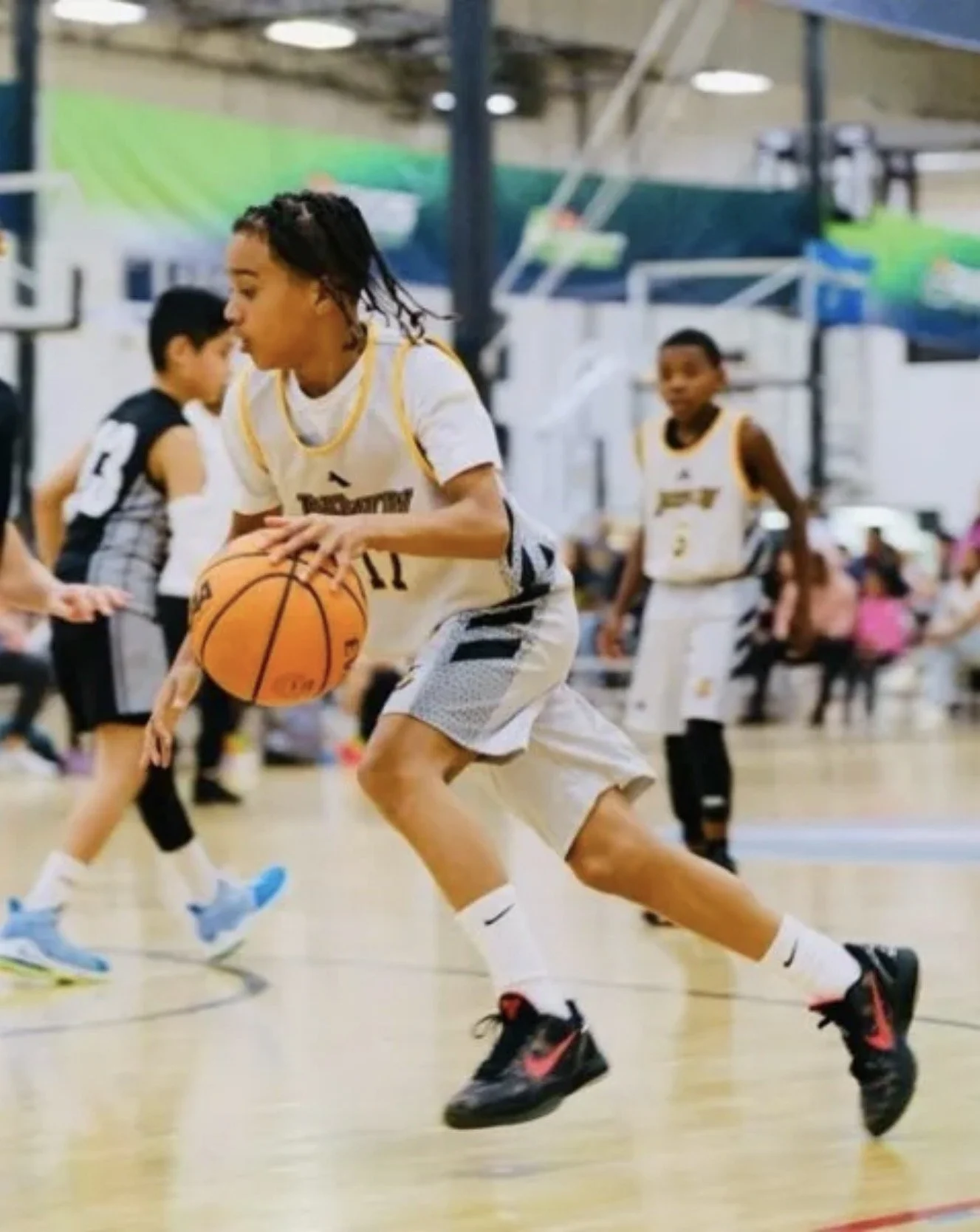
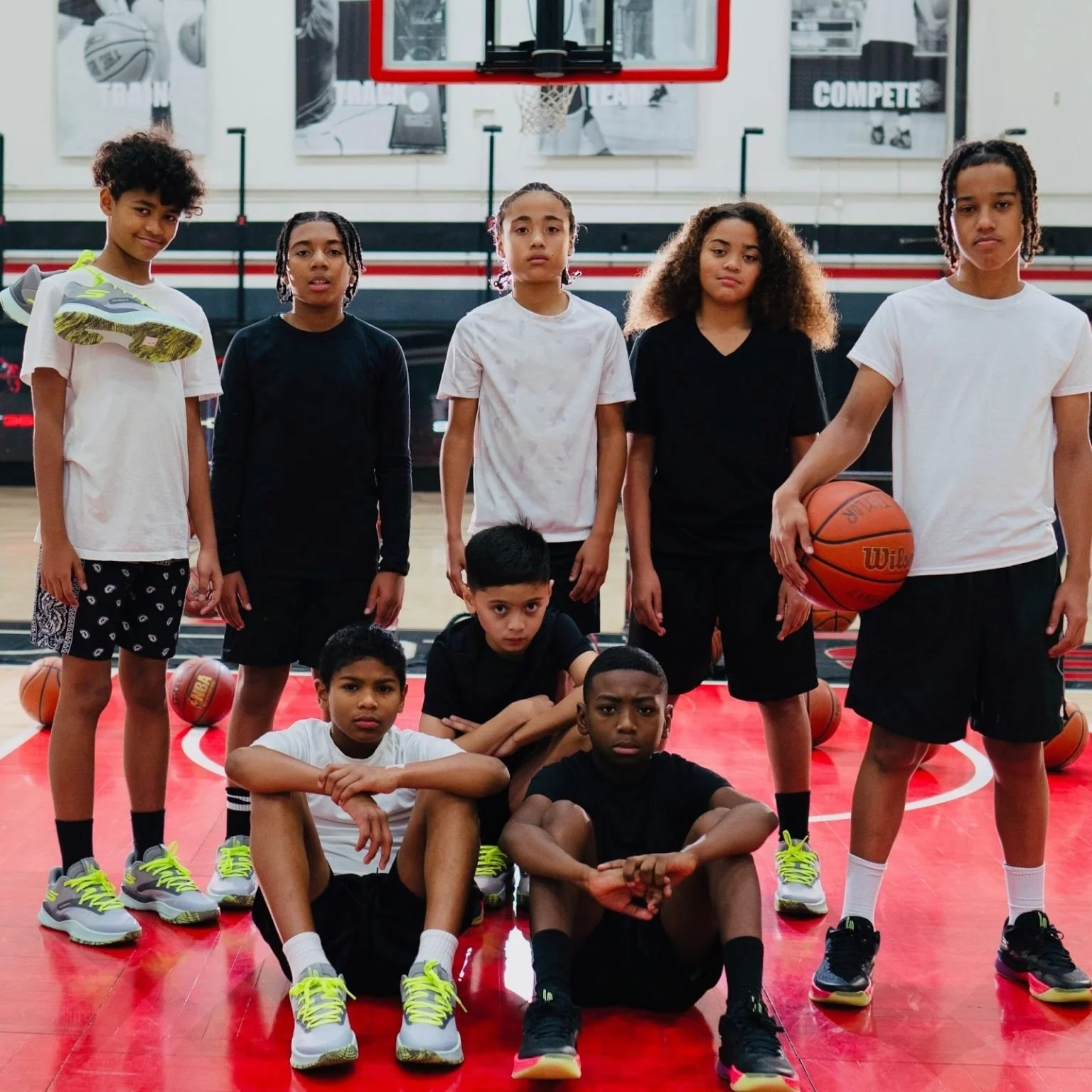
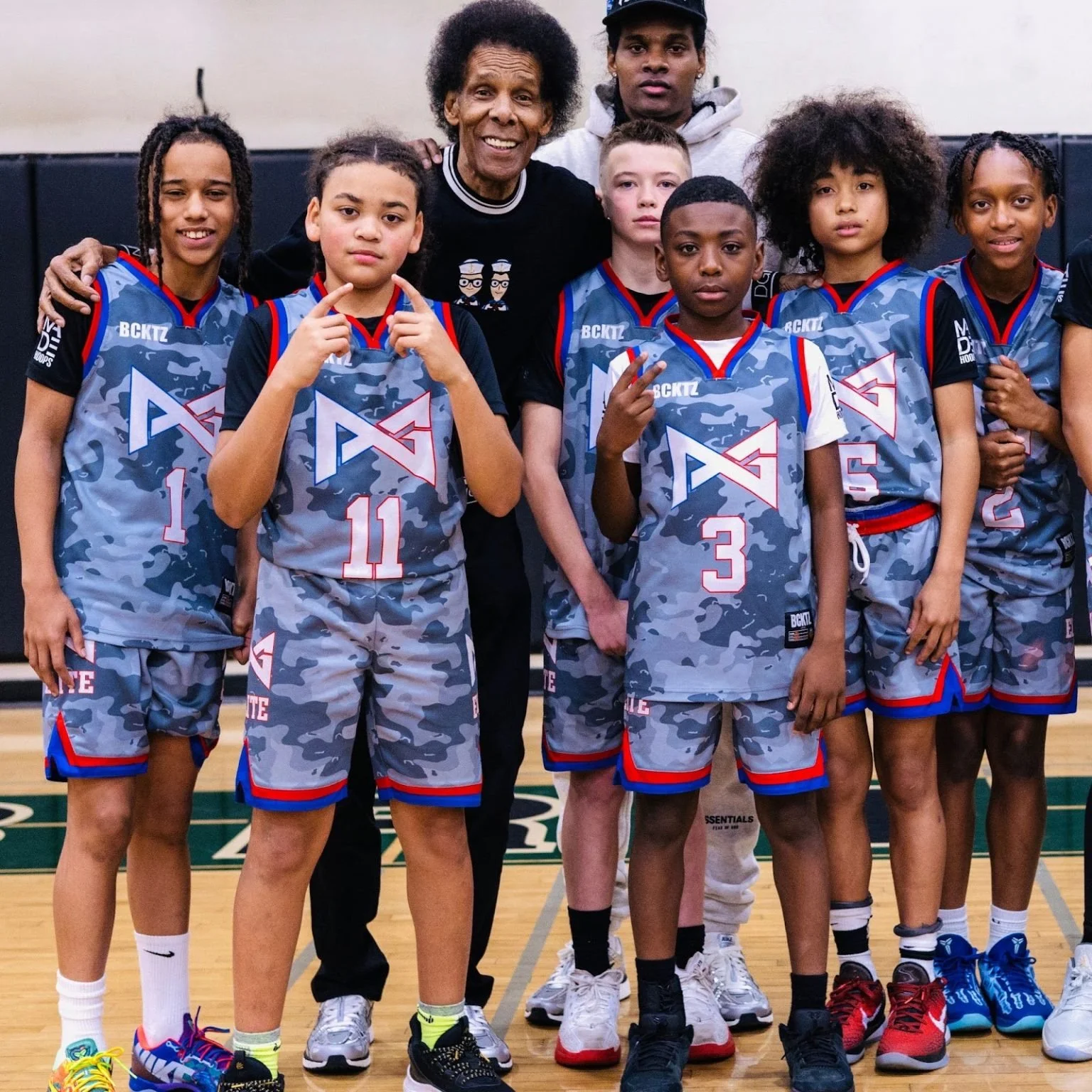
Next up: Noah Taylor and JoJo Price are turning youth basketball into a masterclass in excellence
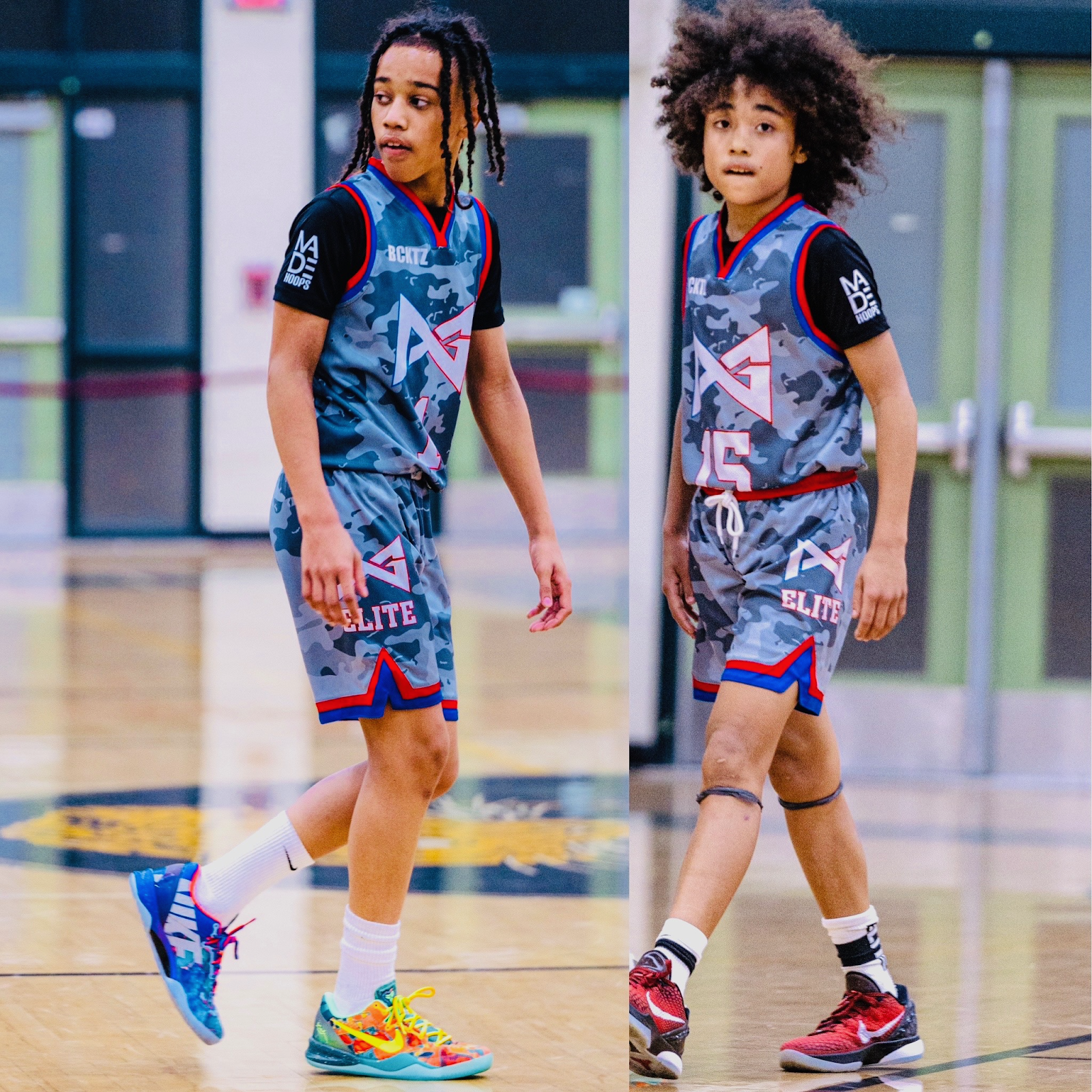
With guidance from coach Marcus Price and mentor Lionel Benjamin, two six-grade prodigies are redefining what “elite” looks like inside the Paul George Elite program.
Contributing writer Kailen Hicks
Before they can even drive, Noah Taylor and Josiah “JoJo” Price are already rewriting the script for youth basketball.
Their chemistry is instinctive, their confidence infectious. At just 12 years old, they’ve become a must-see duo for anyone watching the grassroots game evolve.
But inside the Paul George Elite system - the Nike-sponsored pipeline backed by NBA All-Star Paul George - the spotlight is only half the story.
As Lionel Benjamin, one of the program’s architects, puts it:
“We treat these kids like college players, because that’s what we’re preparing them to be.”
Ever since its founding in 2010, Nike’s EYBL youth basketball league has taken the AAU basketball circuit by storm, serving as a pivotal form of growth for many current young NBA stars, including, but not limited to Cooper Flagg, De’Aaron Fox and Jalen Green.
The league is hailed as the apex of youth basketball in America - host to over 40 teams, many of which are managed by top NBA and WNBA players such as Kevin Durant, Sabrina Ionescu and Lebron James.
The program and the people behind it
For Benjamin, the work is personal. A former Cal State Northridge standout who played overseas before moving into coaching, he’s now a full-time mentor and manager of talent. His days start before sunrise, fielding calls from recruiters, trainers, agents and parents.
“It’s organized chaos,” said Benjamin, the program’s assistant director of operations. “These kids have agents now. NIL deals. You have to stay locked in just to keep up.”
Behind the scenes, coach Marcus Price - a disciplined, defense-minded strategist - handles the day-to-day grind. He’s guided Paul George Elite’s 11U team to national titles, including a championship run at the Coca-Cola Nationals. Known for his balanced approach to development, Price prioritizes fundamentals and focus as much as flash.
Together, Benjamin and Price form the foundation of PGE’s next era: a bridge between raw talent and readiness.
“Paul [George] gives them access and opportunity,” Benjamin says. “Marcus gives them structure.”
As a longtime player of many trades in the basketball world, Benjamin says that youth basketball is changing dramatically, and that the home-grown, ‘grassroots’ identity that AAU has brandished for decades might be in the rear-view for good.
The future in motion with Noah & JoJo
The results speak for themselves.
Taylor and Price, both sixth-graders, have become the heart of PGE’s most electric youth squad. The team went 80-2 last season - a staggering record fueled by chemistry, work ethic and confidence well beyond their years.
“They already show the prototype of the next generation,” Benjamin says. “Their mentality, their leadership, their strength. They carry themselves like they’ve been here before.”
Taylor is the cerebral one with a floor general mentality who sees the play before it happens. His calm tempo and mature reads make him a natural leader.
JoJo Price, the son of coach Marcus Price, is a natural scorer with charisma that fills a gym. His creativity and competitiveness make him a walking highlight.
Together, they’re learning how to balance talent and temperament.
That’s exactly how their coaches want it.
“We hold them accountable on and off the court,” Benjamin says. “Grades, discipline, attitude. Because talent without structure is short-lived.”
The two have made headlines recently due to their success, achieving recognition in stories on notable local networks like ABC 10. Combined, the two average over 60 points a game, which alone is generally above the overall team average in U-11 AAU games.
Benjamin said that the sixth grade team has only lost two games in roughly their past 70. The key? A psychological advantage over their competition.
“They’re dogs… those two guys, once they're on the floor together, they don't get rattled, they don't get frustrated, and they're going to play from the start to finish.”
More than ballplayers: Inside the system teaching tomorrow’s stars how to lead and last
What Paul George Elite is building is bigger than basketball. It’s a pipeline for discipline and leadership, powered by mentorship and opportunity.
“These kids are learning what it takes to be professionals in mindset, in preparation, in how they carry themselves,” Benjamin said.
The statistics back it up: more than 70% of current NBA players came through programs like EYBL, the same system PGE competes in. For Taylor and Price, that means they’re chasing a dream while inside the system that shapes it.
And with Price and Benjamin guiding their steps, they’re already studying the playbook for something deeper than basketball.
Because at Paul George Elite, the goal isn’t just to create the next stars.
It’s to create young men who understand the long game: on and off the court.
In some ways, the EYBL circuit has become an essential stepping stone for the average player today. A New York Times article published in 2023 stated that roughly 55% of NBA players at the time had played in a Nike EYBL circuit on their way to the league.
“We fully sponsor our teams from the eighth grade all the way up… our thing is we treat them like they’re college players,” Benjamin said. “They’re going to stay two to a room, we’re going to feed them three times a day, we're going to get nice cars to travel to and from the games, and we’re going to fly on good flights.”
In a March interview, former MVP, two-time champion, and current EYBL team representative Kevin Durant himself cited the increased structure of the league as a separator for its success, and a notable opportunity for this new generation that he didn’t have.
Benjamin concurred - saying that EYBL programs afford kids a level of stability that allows them to build chemistry that eluded previous AAU generations.
“We start in fifth grade. You would want those kids to continue playing all the way until they're a 12th grader. So that's been our success - keeping groups of the kids together,” said Benjamin.
What role does Paul George actually play for the team?
A number of these teams harbor the names of some of the most prolific NBA players at the forefront of their branding. While some might think that the roles of these superstars is one that is minimal, with them operating at a distance and just allowing their namesake to be the only thing of value, Benjamin says that George’s role is much more involved.
"You're probably at [close] to $4.5 million if you factor in all of the teams and the travel,” said Benjamin. “The biggest thing [from Paul] is his financial support that he puts behind these kids in order for them to be in position to go travel and do what they need to do to achieve these dreams.
Benjamin continued on, adding that many of the crew’s players cited George, now a 15-year NBA veteran, as someone who they modeled their craft after. Their ability to play games under his name, as well his guidance has been invaluable.
“And then there’s the mentorship that he provides for these players. I mean, he's always accessible to him. It's a little harder now, now that he's in Philly, but, you know, here, especially for a lot of our college guys, he's there. He's a phone call away.”
What’s in store for the future?
The evolution of EYBL, in conjunction with the revolutions of the NIL era have changed the youth basketball league landscape drastically in the past few years, and that the shift in AAU basketball image - from that of rugged grassroots tournaments to a polished, structured businesses - will only grow more pronounced as time goes on.
“As long as these brands are willing to spit out money, I think everybody's gonna have to turn into some type of franchise. It becomes a dog-eat-dog world.”
Benjamin acknowledges that new NIL laws have enabled younger players to have immense leverage in an industry where they were once notoriously exploited.
“These kids are allowed to make money. These kids have become the breadwinners in some of their homes… before, a college coach couldn't give you a candy bar without it being a violation,” said Benjamin. Now, you can go to school and have a Snickers deal,” said Benjamin.
A common criticism of the NIL era of youth and college sports is that it has tarnished the soul of youth sports, giving influence to a demographic of athletes who aren’t ready for it. However, Benjamin is in favor of the shift in power dynamic.
“I don't feel like it's made the players cocky,” Benjamin said. “I mean, I think it's just putting them in a position where it's their just-due.” want to launch a business. Maybe you want to turn a hobby into something more. Or maybe you have a creative project to share with the world. Whatever it is, the way you tell your story online can make all the difference.